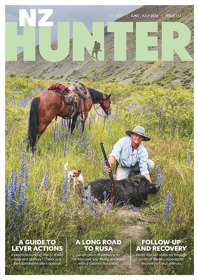
Issue 113 - June July | On Sale Tuesday 2nd June
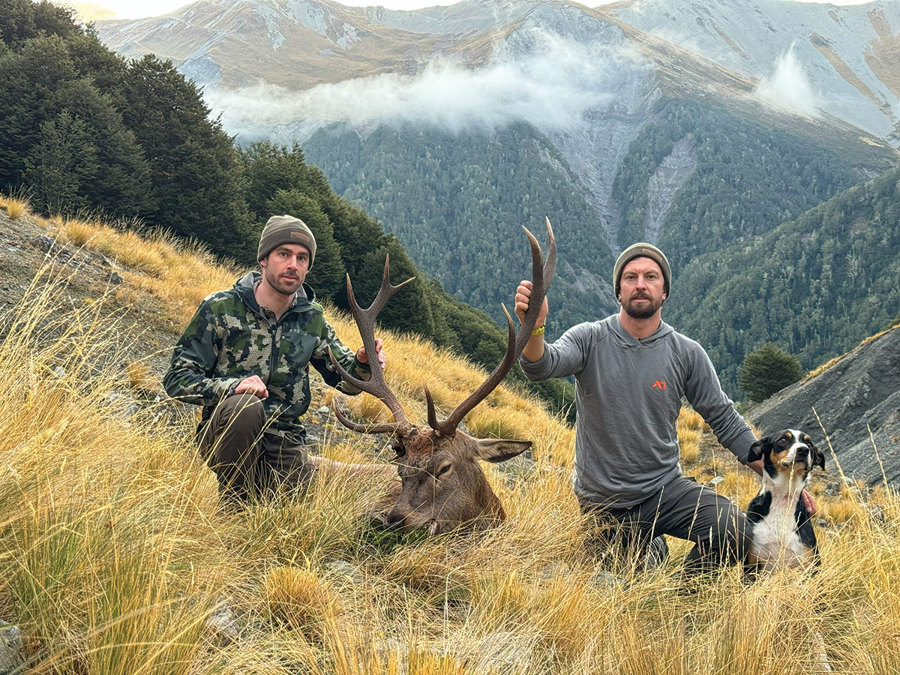
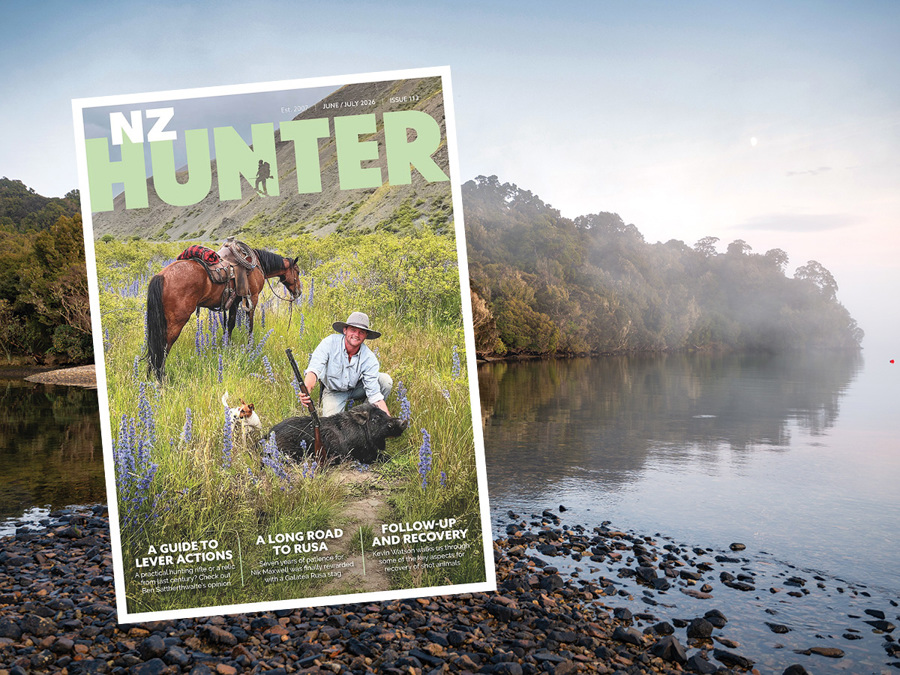
For many hunters, in the South Island this Red roar on public land was a bit of a disappointment
In a lot of places there was a serious lack of mature stags to be found, while hind numbers were still quite high with only a handful of very young stags and spikers left to do the mating.
The lift in venison prices and the opening of some new processing plants has led to a significant increase in WARO (helicopter venison recovery) this year, but the perennial problem of only the stags and largest hinds being economically viable for them to recover has led to a disaster for game animal management and conservation in some areas. There is no more of only the biggest and best stags getting to breed, and we are getting reverse natural selection on a huge scale. In some areas on public land there are now large numbers of skinny hinds that are no use to anyone – neither the WARO operators, the trophy hunters, nor those that only hunt for nice fat venison. And in some cases they are having a significant effect on conservation values in these areas. I think we all agree we need to manage hind numbers for both hunting and conservation values.
So what is the solution?
We can’t blame the WARO guys. They are only trying to operate a commercially viable business working within what they are allowed to do by their WARO concession. That bits not too difficult, as there are very few restrictions in a WARO concession other than poison/pesticide buffer zones and withholding periods, and the two brief closure periods around the roar and the Christmas holidays. There is no restrictions/conditions on what animals they can shoot. The ever increasing DOC Battle for the Birds and Ospri TB poison operations do take significant tracts of land away from them for periods of time, and there are definitely some issues there that could be streamlined which MPI is working on at the moment. But the perennial problem is the poor economic viability ensuring the wrong animals are getting targeted in a lot of places. Again, this is variable, as some operators are better than others at shooting more and smaller hinds depending on their machine overhead costs and carcase ferry times. The more expensive the machine is to run, and the further they’ve got to fly them, the heavier the carcase has to be to remain viable.
Ultimately the country needs to decide if it’s prepared to spend some money to get these commercially unviable-to-recover hind numbers down on public land. (On private land is up to the landowner to decide what they want to do with their deer management and finance it themselves - the tax payer should not be paying in this case.)
This is where HOSIs can work really well as in the case of Wapiti, where hunters paying to enter the ballot covers the deer management and other conservation costs year round. There are other areas with high Red deer trophy potential that New Zealand’s hunters would also be prepared to pay for the opportunity to hunt a well-managed herd with quality animals through a block and ballot system over the roar. There needs to be some sort of exclusivity though, or the system won’t work. Again, Wapiti is the perfect example. You cannot hunt wild Wapiti on public land anywhere else in New Zealand, the trophy potential is well managed, and therefore hunters are prepared to pay for the privilege.
But until we get HOSIs across the line in the areas where they can work, even in those areas and certainly in the rest of public land where the deer are not of sufficient quality, we will need to subsidise the WARO operators to take the financially unviable females, or pay for aerial search and destroy operations to shoot them and leave them. Organised volunteer management hunts work in certain situations, but in the majority of public land it’s going to need helicopters, or the only other alternative at this stage which some green ideologues are promoting to kill deer – 1080 – and we’re not going there.
The cost of managing deer on public land over and above those HOSI which are largely self-funding will need to be borne by the tax payer. Just like the hundreds of other examples of all sorts of things the public pays, the government, or local bodies, or other organisations to manage for the benefit of the whole country. There is never enough money for all the things we expect the government to do these days therefore we need to maximise the opportunities where there is ability for self-funding. To do this we need to ensure the very animals in the areas that hunters are prepared to pay for the opportunity to hunt are protected and managed.
This will take a whole new look at how we manage game animals across the country. Currently they are managed by DOC for their harmful effects only, with the only good deer being a dead deer. Any reviews of WARO done by DOC previously have been done under this lens, and that is why its management of WARO has failed and we’ve had the situation so many of us experienced this roar. The current boom/bust WARO cycle does not work for anyone. Good animal management is about killing the right deer, in the right place, at the right time, by the right people - and a government department operating as it has to under outdated “control only” focused legislation is not the right body to be managing this. There was a lot of great stuff in National’s pre 2023 election Hunting and Fishing plan which will go a long way to solving these problems, and that will be the topic for next issue – watch this space!
.
In this issue:
This issue we have...
06 – Austria to New Zealand | By Ryan Hart
14 – A Long Road To Rusa | Nik Maxwell
18 – A Gun you Can load on Sunday And Shoot All Week | By Ben Sattherthwaite
24 – Hapuatuna | Stewart Island Series Part Three | By Mitch Thorn
32 – Something of Value | By Peter Ryan
36 – Animal Recovery | By Kevin Watson
42 – Wild Edge Three –There’s More to ‘Resilience’ | By Hannah Rae
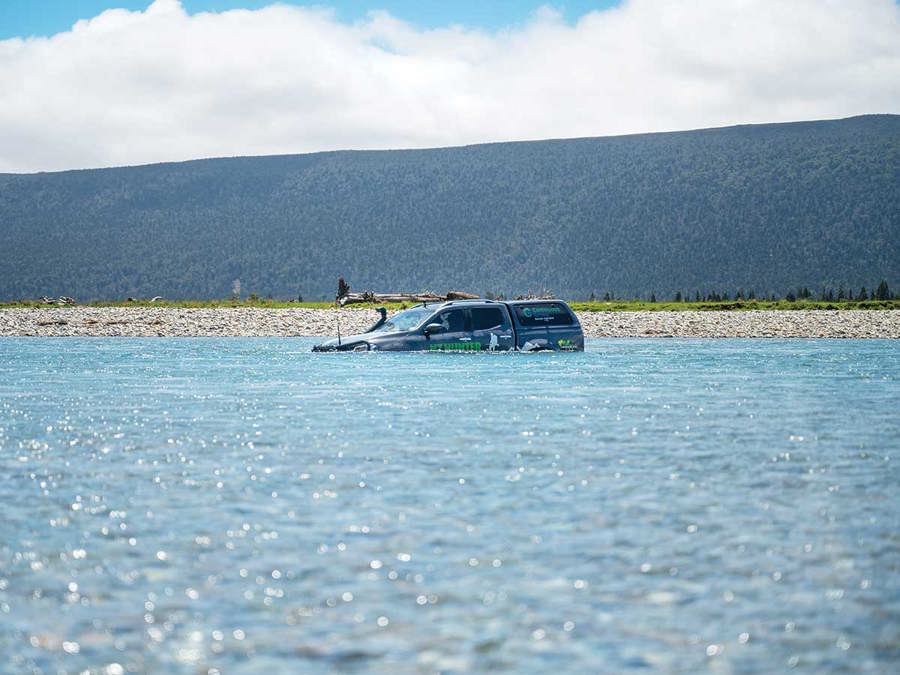
46 – The Ultimate Hunting 4x4 | Part Two – Which Ute | By Luke Care
50 – Spartan Rifle Build | By Scott Waterman
52 – Better Hunting – Night Hunting | By The GAC
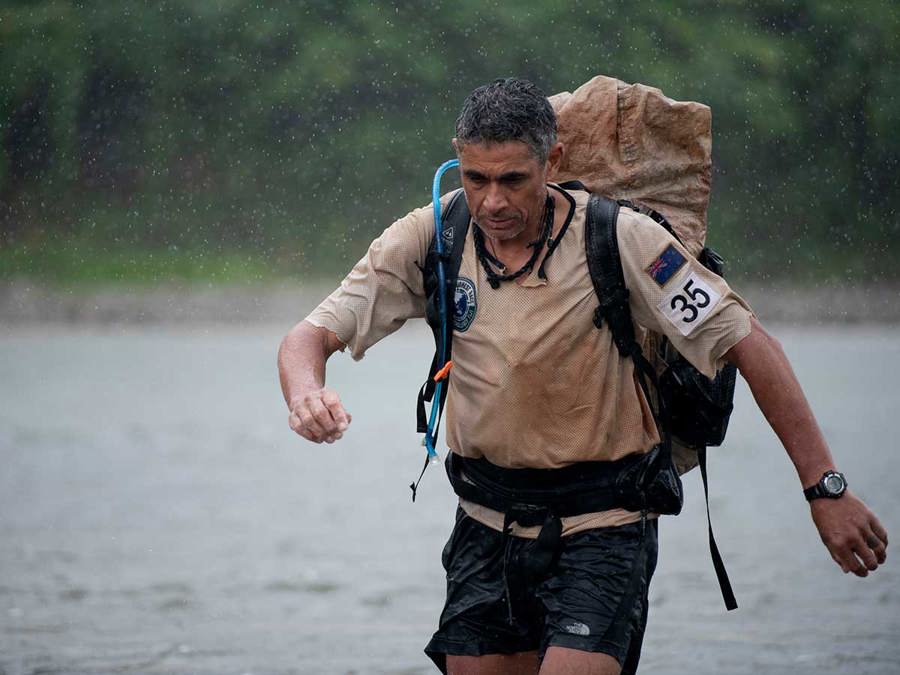
56 – Nathan Fa’Ave | By Hannah Rae
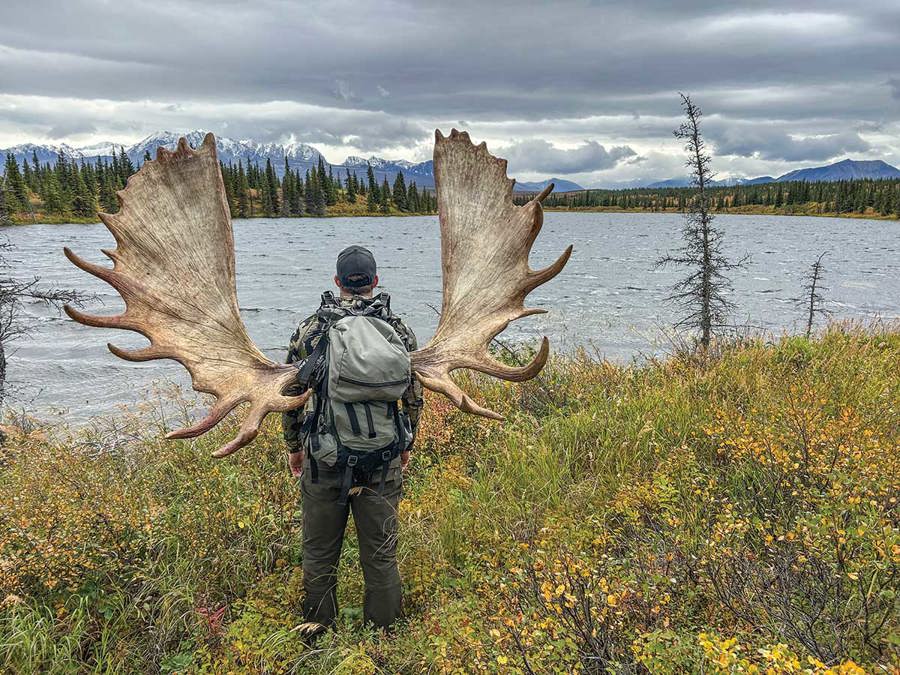
64 – Game Animals of New Zealand - Moose | By NZDA and Francesco Formisano
66 - GAC Update | By The GAC
68 – Remote Huts – Mungo Hut | By Andrew Buglass
72 – The Cursebreaker | By Luke Care 86 – Alaskan Trio | By Ben Lowry
94 – Wild Pork Loin with Savoury Farce | By Richard Hingston
Test Fires: We evaluate...
La Sportiva Aequilibrium | By Luke Care
Sea To summit Sleep System | By Luke Care

e-magazine available online
You can purchase electronic versions of the magazine on ZINIO for viewing on the following devices: Rim, iPad, WebOS, Android, Win8, PC/MAC.
Buy the Printed magazine:
You can also easily subscribe to our original printed magazine plus if you are looking for older issues we can help you with that also.
Hunting for a Back Issue?